
Nine-Banded Armadillo Quadruplets
Four identical babies from a single egg. Nine-banded armadillos give birth to identical quadruplets, all from one fertilized egg. How polyembryony works and why scientists love it.
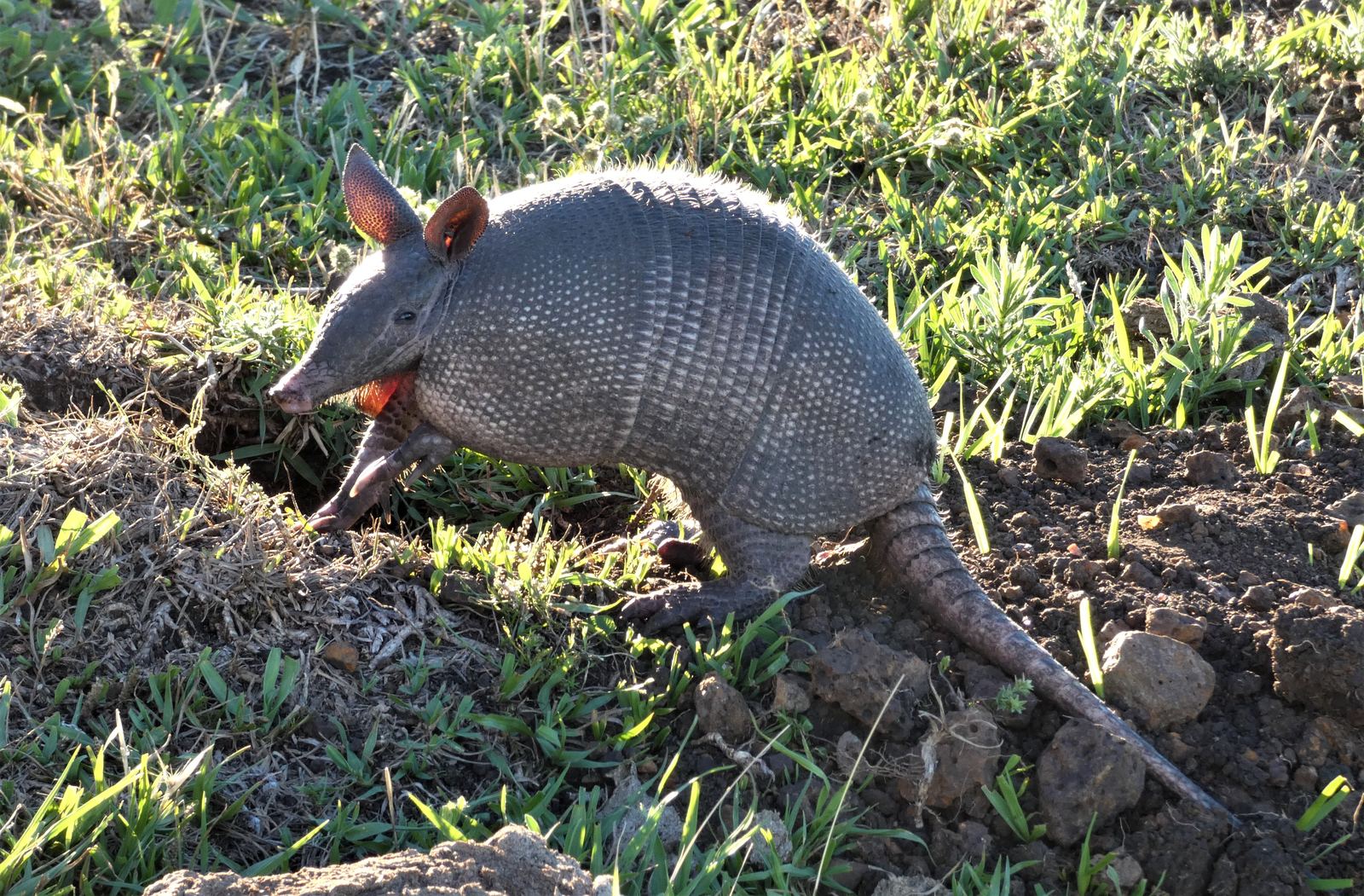
A nine-banded armadillo at its burrow in Uruguay: Enrique González, CC BY 4.0
One egg, four babies
Most mammals that have several babies at once release several eggs. The nine-banded armadillo does something stranger. A female produces a single egg, which is fertilized and grows into a tiny ball of cells. Then it waits: implantation in the womb is delayed for about three to four months, which helps time the birth for a good season.
Once the embryo finally implants, it splits into four. Each of the four embryos gets its own amniotic sac and umbilical cord, but all of them share one placenta. About four months later the mother gives birth to quadruplets that came from the same egg, so they are the same sex and genetically identical. Biologists call this polyembryony, and armadillos in the genus Dasypus are the only mammals known to do it as a regular part of reproduction.
Why split instead of making four eggs
Nobody can ask an armadillo, but the leading idea is a physical limit. The female's reproductive system seems able to carry only one embryo before implantation, so splitting one embryo into four is a workaround that still delivers a full litter. Delaying implantation longer does not change the number of babies; it is four almost every time.
Born ready to roll
Baby armadillos weigh about 85 grams at birth, roughly 3 ounces. Their eyes are already open and they can walk within hours, though their shells start out soft and take a few weeks to harden. The young stay in the burrow drinking milk for about two to three months, then follow their mother on foraging trips before heading off on their own somewhere between six months and a year old.
Adults are diggers with a strong sense of smell, snuffling up beetles, ants and other small invertebrates. They can hold their breath for up to six minutes and walk across the bottom of a stream, and a startled armadillo can leap about 3 to 4 feet straight up.
A new name and a gift to science
In 2024 a study in the journal Systematic Biology split the species. Armadillos in North and Central America, including every armadillo you might meet in Texas or Florida, are now classed as the Mexican long-nosed armadillo, Dasypus mexicanus. The nine-banded armadillo in the strict sense lives in South America. Both have the same quadruplet trick.
Those built-in sets of four identical siblings are valuable to researchers, because any difference between them must come from the environment rather than genes. Armadillos are also one of the few animals besides humans that can catch leprosy, and they have helped scientists study the disease since the 1970s.
- A nine-banded armadillo at its burrow in Uruguay: Enrique González, CC BY 4.0
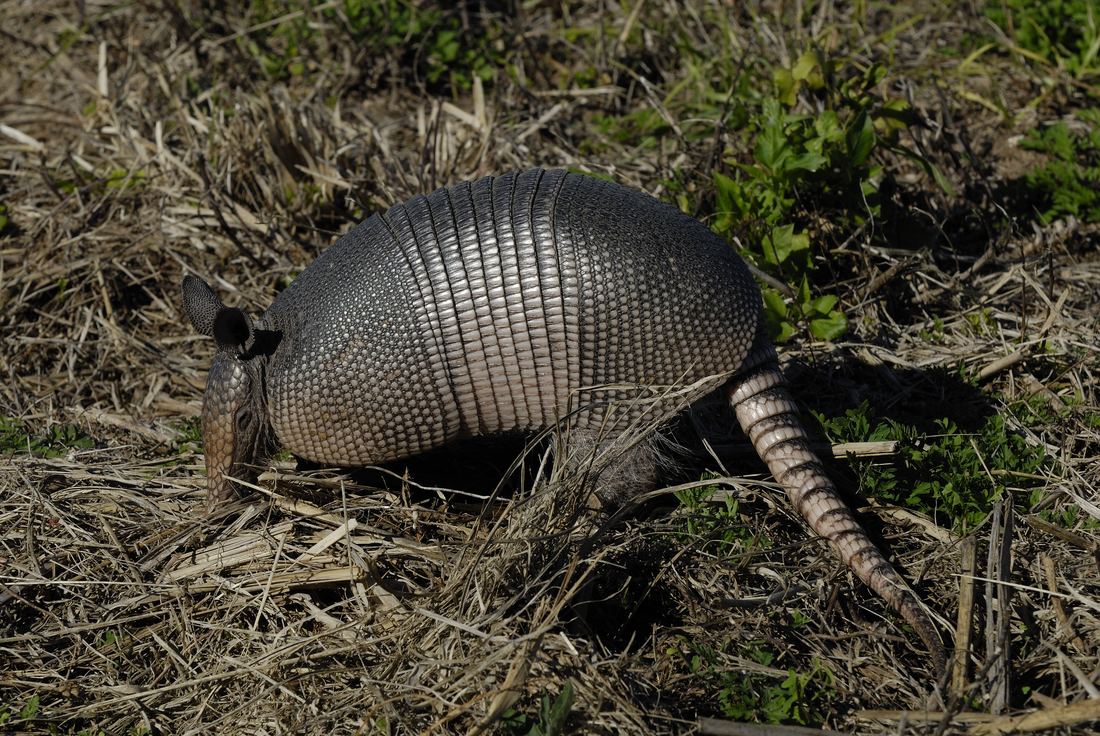
- A long-nosed armadillo foraging in Florida: Hans Stieglitz, CC BY-SA 3.0
Text written by Actual Twin.
← Twins Days Festival in Twinsburg, OhioBinary Stars: The Sky's Twins →


,_Uruguay,_2020.jpg)
