Clones in Nature
Living copies, from aspen groves to bananas. Pando the aspen giant, strawberry runners, seedless bananas, armadillo quadruplets and Dolly the sheep: how nature and science make exact copies.

Pando, the giant aspen clone in Utah, from the air: Lance Oditt, Friends of Pando, CC BY-SA 4.0
Copies without a copier
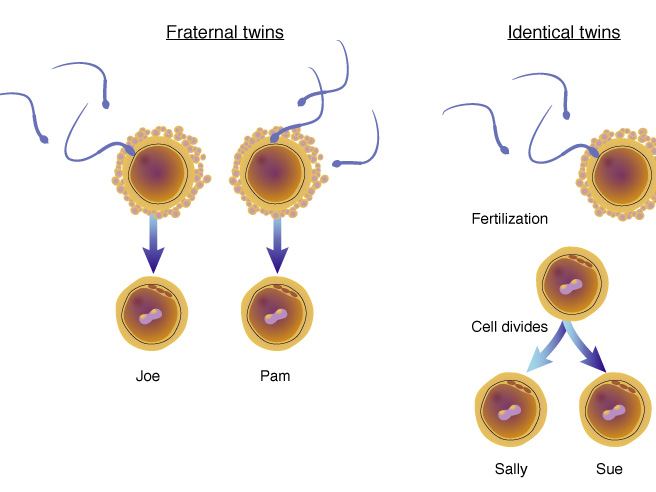
A clone is a living thing that carries the same genes as its parent. It sounds like science fiction, but nature makes clones all the time. Identical twins are, in a genetic sense, natural clones of each other, and many plants copy themselves as a normal way of spreading.
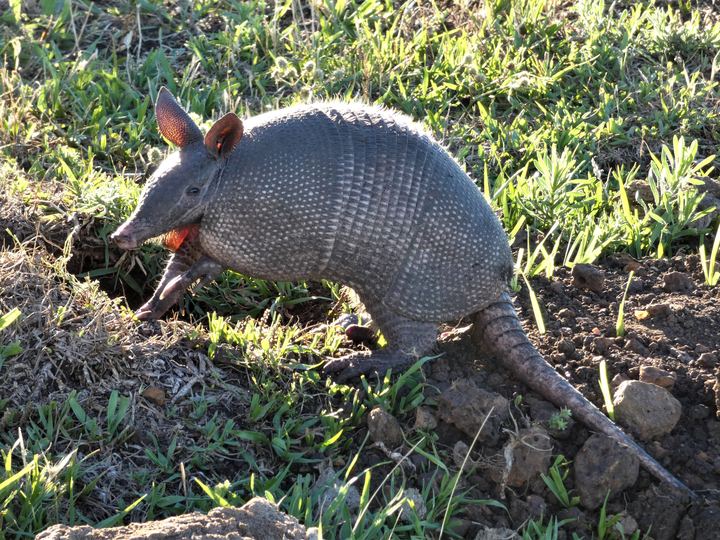
Nine-banded armadillos take it even further. A mother produces a single fertilized egg that splits into four embryos, so she usually gives birth to four identical pups at once.
Pando, the forest that is one tree
In the Fishlake National Forest in Utah stands a grove of quaking aspen that looks like thousands of separate trees. It is really one male tree. Its roughly 47,000 trunks all rise from a single shared root system spread across 42.8 hectares, or 106 acres, making Pando the heaviest known tree and widely called the largest organism on Earth by weight.
Scientists identified the clone in 1976, and its name is Latin for I spread. Its age is hard to pin down because trunks keep dying and regrowing, but the latest estimate, from 2024, puts it at somewhere between 9,000 and 16,000 years. The often repeated figure of 80,000 years has been withdrawn.
Runners, seeds and the banana in your kitchen
Strawberry plants send out runners, long stems that creep along the ground and put down roots, each one becoming a new plant identical to its parent. Dandelions can go a step further and make seeds without fertilization, a process called apomixis, so the fluffy seed heads blowing across your lawn often carry clones.
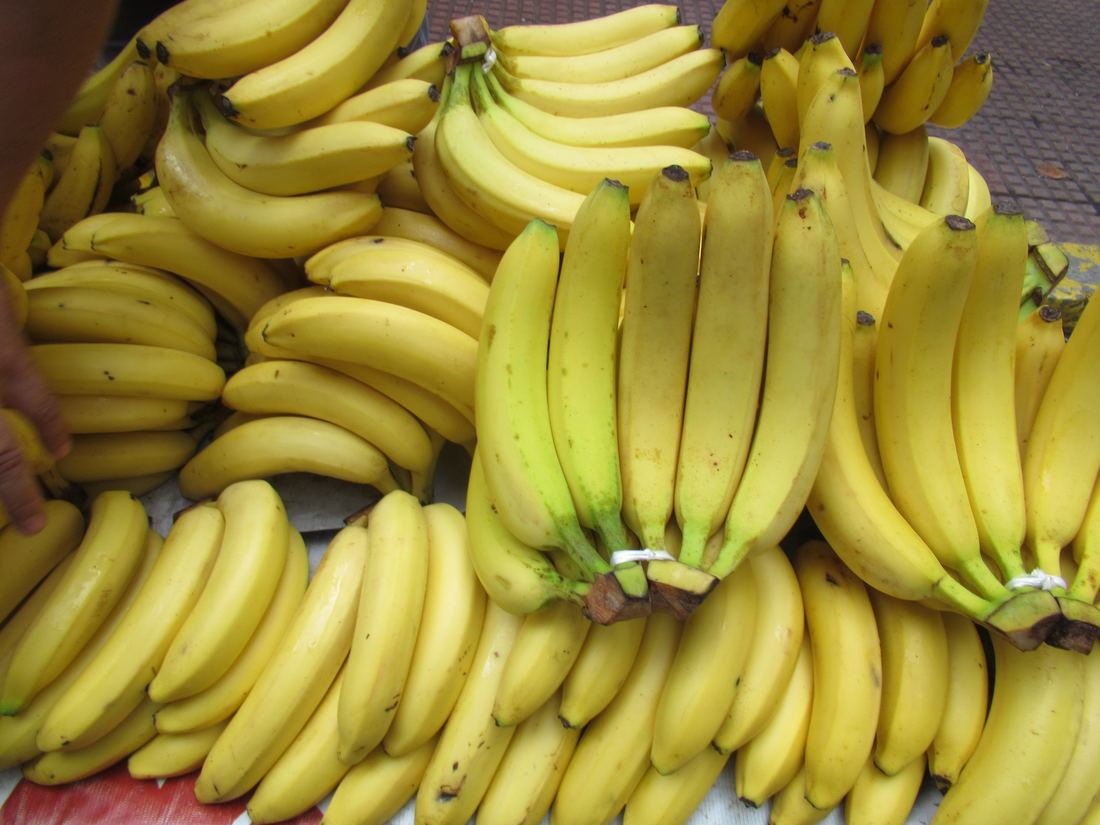
The bananas in most supermarkets are clones too. Cavendish bananas cannot reproduce sexually, so every new plant is grown as a clone of an existing one. They took over world trade in the 1950s after Panama disease wiped out the earlier Gros Michel variety, and they now make up around 99 percent of banana exports to developed countries. That lack of genetic variety makes them vulnerable to a newer strain of the same disease, which reached the Americas in 2019.
Dolly, the clone made in a lab
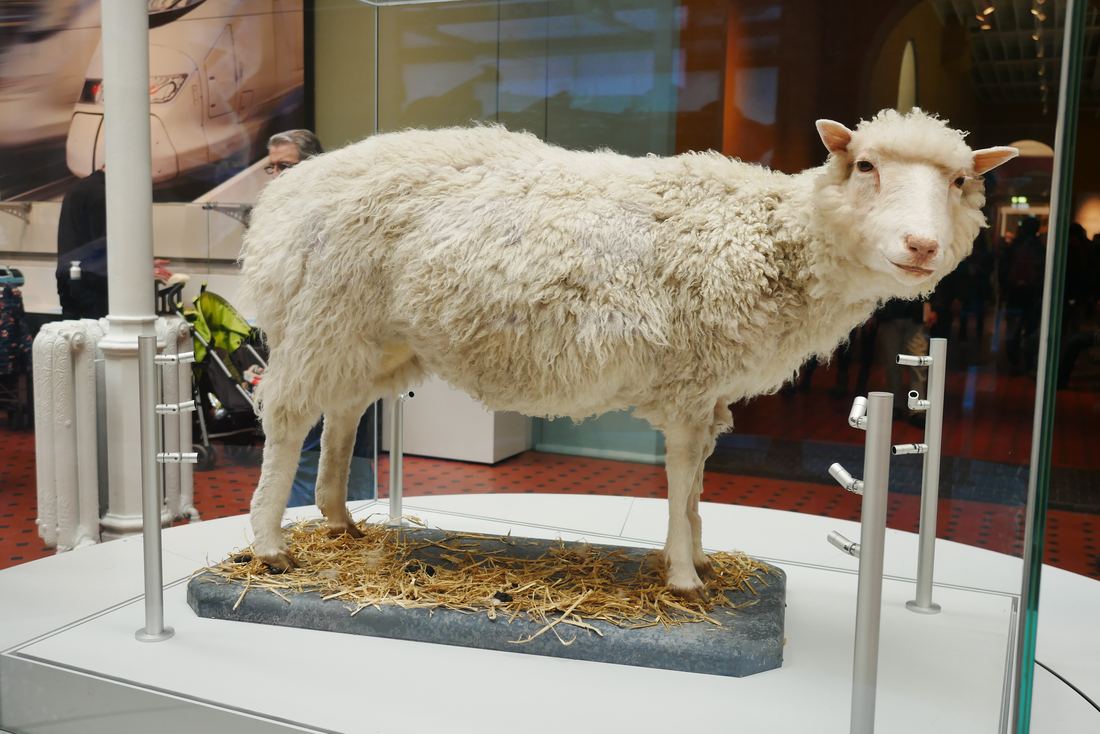
Dolly the sheep was born on July 5, 1996, at the Roslin Institute in Scotland. She was the first mammal cloned from an adult body cell: scientists took the nucleus from a mammary gland cell and placed it in an egg cell. Because of that, the team named her after the singer Dolly Parton. Her birth was announced to the world in February 1997.
Dolly was not the first cloned animal, since frogs had been cloned decades earlier, but she proved that a specialized adult cell could start a whole new life. She had several lambs of her own and died in 2003. Her preserved body is on display at the National Museum of Scotland in Edinburgh.
- Pando, the giant aspen clone in Utah, from the air: Lance Oditt, Friends of Pando, CC BY-SA 4.0
- Dolly the sheep at the National Museum of Scotland: Sgerbic, CC BY-SA 4.0
- Cavendish bananas, grown from clones: SwarmCheng, CC BY-SA 4.0
Text written by Actual Twin.
← The Science of DoppelgangersIdentical vs Fraternal Twins →