Freemartins: Twin Calves
Why a heifer twin to a bull is special. When a cow has twins of different sexes, the heifer is usually born unable to have calves. Farmers call her a freemartin. Here is the science behind it.
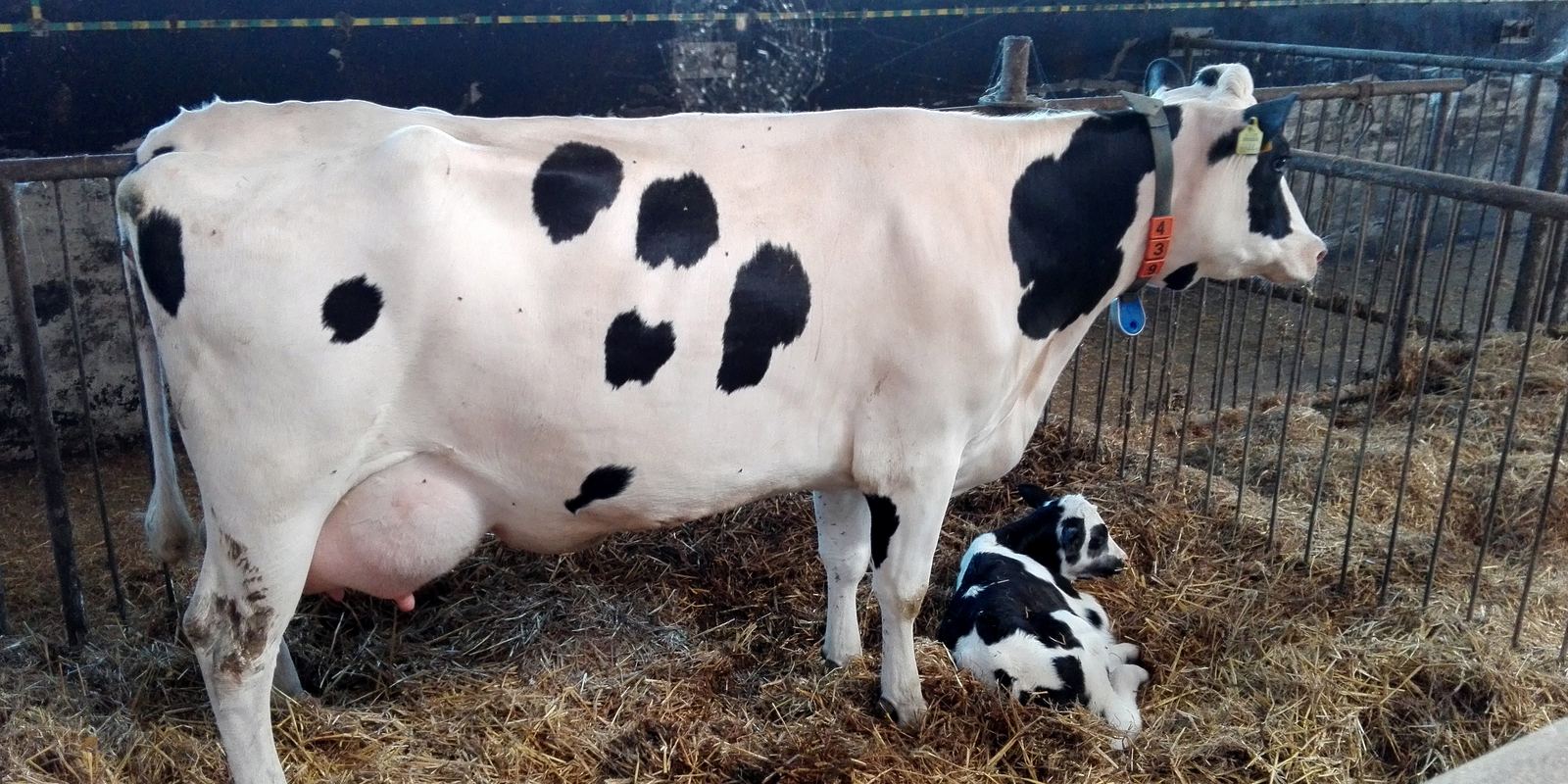
Cow and newborn calf: Witia, CC BY-SA 4.0
A farmyard puzzle
Farmers noticed long ago that when a cow gives birth to twins, one male and one female, the female calf almost never grows up to have calves of her own. They called such a heifer a freemartin. The word is old, and nobody is completely sure where it comes from.
In the 1700s the Scottish surgeon John Hunter dissected freemartins and found that their reproductive organs had not developed normally, but he could not explain why.
The shared blood supply
The answer came in 1916 from Frank Lillie, an American biologist working in Chicago. He showed that in cattle the placentas of twin calves usually fuse in the womb, joining their blood vessels. Blood, hormones and even cells flow between the two developing calves.
Male calves start producing hormones that guide male development earlier than female calves start producing their own. Those signals reach the female twin through the shared blood and disrupt the development of her ovaries and reproductive tract. The male twin is usually unaffected.
The effect only happens when the twins' blood vessels join, so the small number of heifers whose placentas stayed separate grow up fertile.
Living mixtures
Freemartins are also an example of chimerism. Because cells pass between the twins, each calf ends up carrying a small population of cells from its sibling, including blood-forming cells. A blood test on a freemartin can find male cells, which is one way farmers and vets check.
More than 90 percent of heifers born co-twin to a bull are freemartins. Similar cases happen in sheep, goats and pigs, but much less often, because their placentas do not fuse as readily.
Even when the bull twin dies early in the pregnancy, the heifer can still turn out to be a freemartin, because the blood exchange has already happened.
Why it matters
For farmers, knowing a heifer is a freemartin matters because she will not join the breeding herd. Most are raised for other purposes, and some become calm, reliable companions on small farms.
For scientists, freemartins were a big clue. Lillie's work helped show that hormones, not just genes, steer how bodies develop before birth. A puzzle from the farmyard helped open up the modern study of hormones and development, all thanks to twin calves.
Vets can often check a heifer with a simple examination or a blood test soon after birth, so farmers know early.
- Cow and newborn calf: Witia, CC BY-SA 4.0
Text written by Actual Twin.