Double-Yolk Eggs
Twins in your breakfast. Crack an egg and find two yolks? Here is why double-yolk eggs happen, which hens lay them most and whether a double-yolk egg can hatch twin chicks.
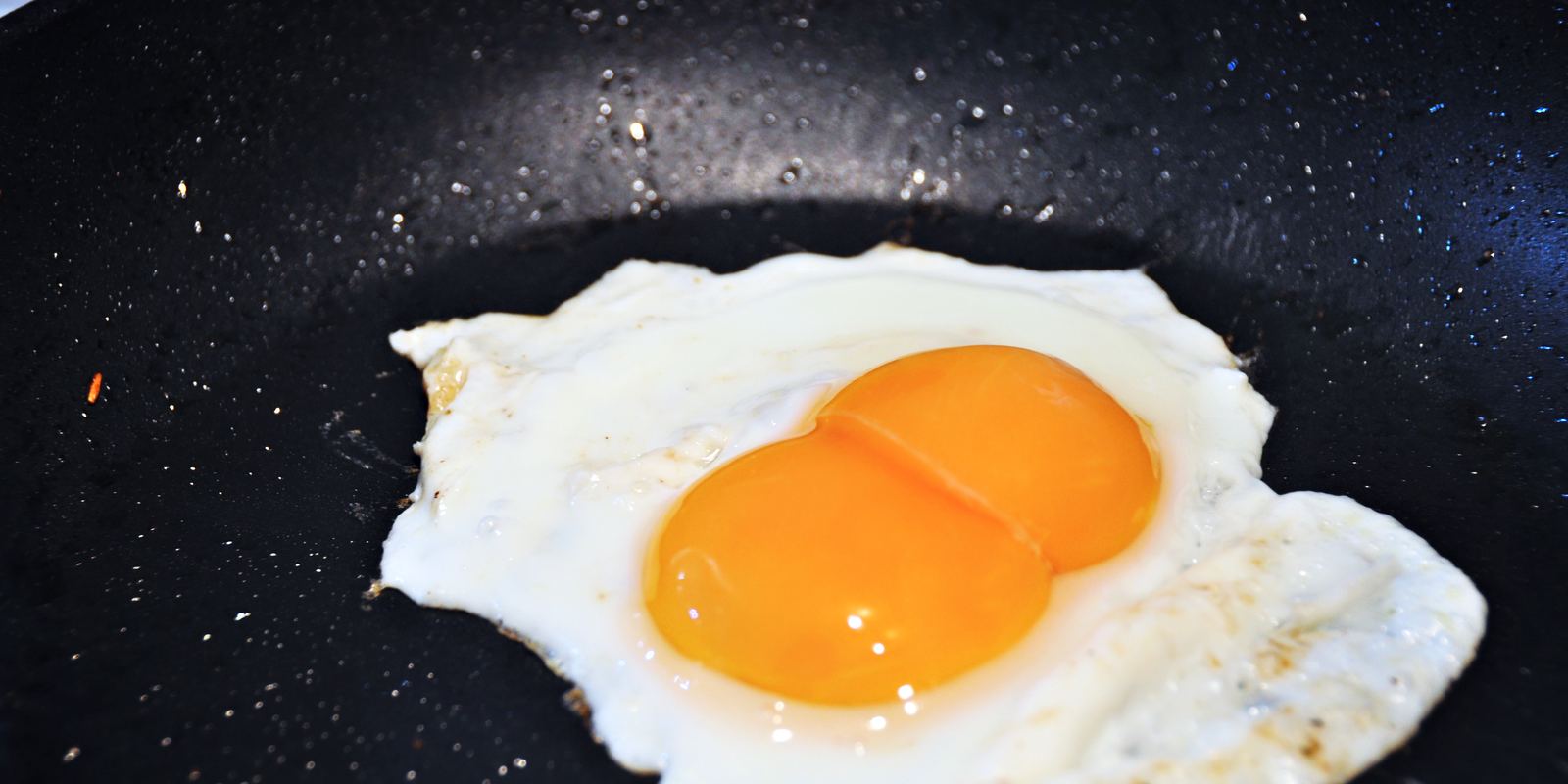
A double-yolk egg: tednmiki, CC BY-SA 3.0
How an egg is made
A hen's egg starts as a yolk released from her ovary. The yolk travels down a long tube called the oviduct, where the white, the membranes and finally the shell are added. The whole trip takes about a day, and most hens release one yolk at a time.
Sometimes two yolks are released very close together. They travel down the oviduct side by side and get wrapped in the same white and the same shell. The result is a double-yolk egg, usually noticeably bigger and longer than normal.
During her laying season a hen usually lays roughly one egg a day.
Which hens lay them
Double yolks are most common in young hens that have only just started laying, because their egg-making system is not yet fully in rhythm. They can also show up in older hens near the end of their laying life, and in heavier breeds that have been bred to lay large eggs.
Commercial farms often check eggs by candling, shining a bright light through the shell to see inside. Double-yolk eggs are easy to spot this way, and some farms pack them in boxes of their own, because many shoppers love them.
Size is a good clue: very large eggs are much more likely than small ones to hold two yolks. In Britain, boxes of double-yolk eggs have been sold in supermarkets as a special treat.
Can they hatch twin chicks?
In theory a double-yolk egg contains two potential chicks. In practice there is rarely enough room, oxygen or nutrients inside one shell for both to develop fully, so double-yolk eggs almost never hatch two healthy chicks. Poultry keepers who incubate them occasionally report twins, usually with help from people at hatching time, but it is uncommon enough to make the news.
Supermarket eggs are almost always unfertilised anyway, so a double yolk on your plate is just a tasty surprise, not a missed pair of chicks.
Lucky eggs
In many cultures a double-yolk egg is thought to bring luck, or even to hint at twins in the family. There is no science behind that, but it is fun all the same.
Even rarer are triple-yolk eggs, and occasionally an egg turns up with no yolk at all, known to poultry keepers as a wind egg or dwarf egg. Hens, it turns out, are full of surprises.
Want to check your own eggs? In a dark room, shine a bright torch through the shell and look for two round shadows.
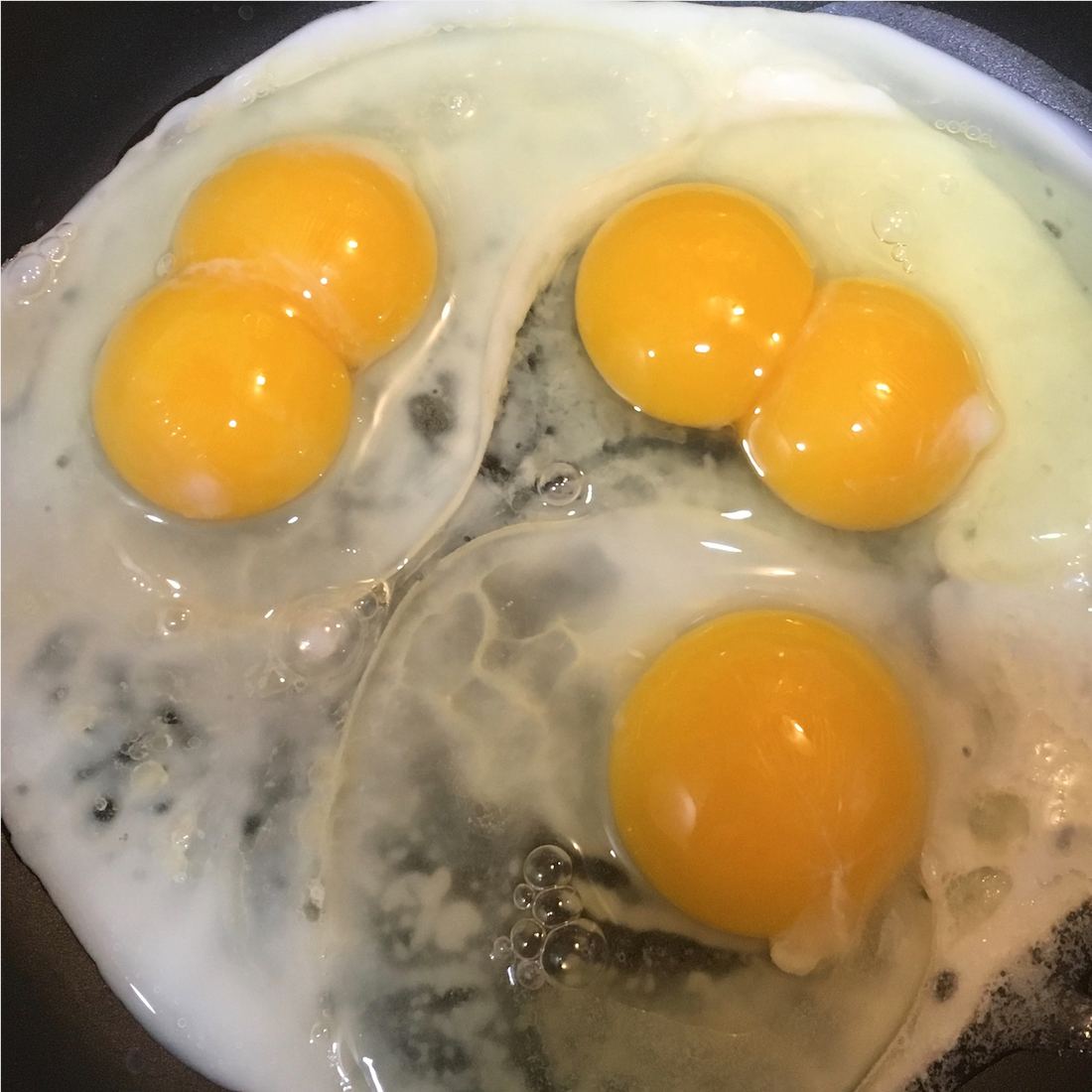
- A double-yolk egg: tednmiki, CC BY-SA 3.0
- Double and single yolks: WhatamIdoing, CC BY-SA 4.0
Text written by Actual Twin.